The Pixel You
Can't See.

OLED-Level Quality LED Durability Zero Moire

NovaVista rewrites LED display physics with a dual-layer optical architecture — continuous emissive surface, no visible pixel grid.

Have You Encountered
These?

Every fine-pitch LED display shares the same four flaws. You've probably learned to live with them. You shouldn't have to.

Screen Door Effect

That faint grid of darkness between pixels. You see it. Your camera sees it. Your clients see it.

Fill factor < 40%

Moire Patterns

Wavy interference fringes that appear the moment a camera points at the screen. Post-production nightmare.

Kills live production

Washed-Out Blacks

Dark scenes look gray. The display reflects ambient light back at you. "Black" is anything but.

Reflectance > 8%

Glare & Reflection

Studio lights, lobby windows, showroom spots — they all bounce off the screen. The image fights the room.

Unusable in bright spaces
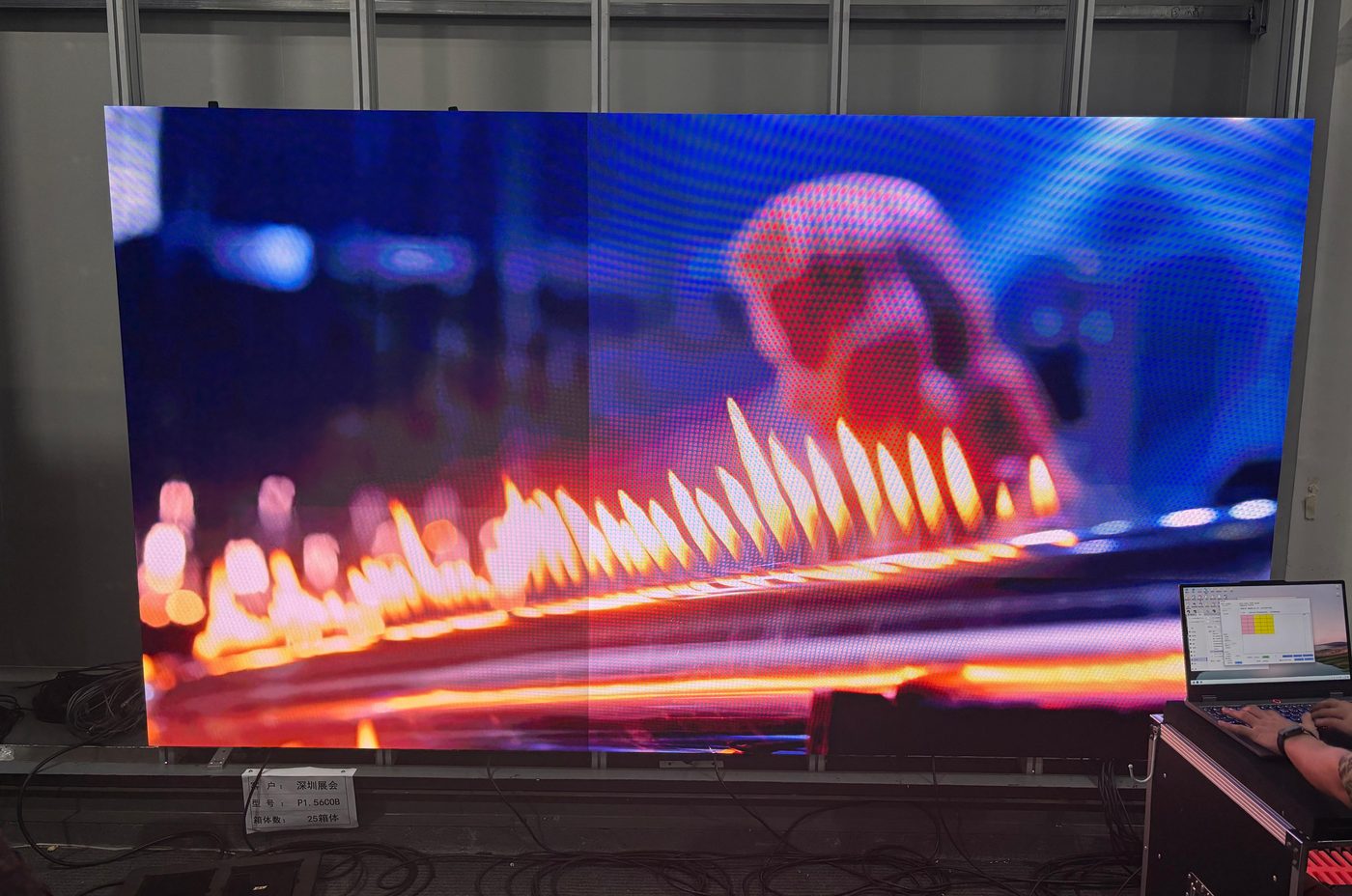
Traditional LED pixel grid vs NovaVista continuous surface

Left: Traditional LED with visible pixel grid. Right: NovaVista continuous emissive surface.

Not Specifications.
Proof.

These aren't spec-sheet filler. Each number represents a problem we solved at the optical level.

110%
NTSC Color Gamut
Wider than most OLED panels. Reds are red. Skin tones are real.
85%+
Pixel Fill Factor
Up from 30-40% in standard LED. The grid is gone. The surface is continuous.
~2%
Surface Reflectance
Down from 8-12% in conventional panels. Black stays black under any light.
8000:1
Contrast Ratio
At low brightness where most panels collapse, detail stays intact.

Two Layers.
One Breakthrough.

NovaVista doesn't process the image. It reconstructs the light — at the physical level, before the signal reaches your eyes. Two optical layers solve the four problems above.

01
Solves: Screen Door + Moire

Dual-Axis Grating

Phase and amplitude modulation reshape each point of light into a uniform square. Fill factor jumps from 40% to 85%+. The pixel grid vanishes. Moire becomes physically impossible — because there's no grid for the camera to interfere with.

02
Solves: Washed Blacks + Glare

AR/AG Surface

An anti-reflective top layer drops surface reflectance to ~2%. Ambient light bounces away instead of washing out the image. Blacks stay deep. Glare disappears. The surface reads as a polished dark panel — not a screen.

Flagship or Professional.
Your Choice.

Same dual-layer optical architecture. Two different tuning philosophies. One solves everything. One solves the core problems — at a price that makes sense.

NovaVista Grating Series LED display panel
Grating Series — Flagship

Everything NovaVista Can Do.

The complete optical reconstruction platform — dual-axis grating at full capacity, AR surface calibrated for broadcast-grade accuracy. For environments where image integrity is non-negotiable and the camera is always watching.

  • Broadcast studios & virtual production
  • Command & control centers
  • High-end film & TV production
NovaVista Extreme Black Series LED display panel
Extreme Black — Professional Value

The Core Problems. Solved. Accessibly.

Suppresses ambient light reflection through optical structure — reflectance as low as 2.0% (SCI mode), over 60% reduction versus standard display glass. In standby, presents a pure "ink black" with rich dark-field detail and distinct layering. Eliminates dark-field graying and ambient glare at a professional price point. Not a stripped-down version — a purpose-built one.

  • Commercial display & digital signage
  • Meeting & conference room recording
  • Exhibition halls & live streaming

Competitive
Benchmark.

Premium panels proved that continuous emissive surfaces are the future of professional display. NovaVista arrives at the same destination — through a different optical path.

Different Path. Same Destination.

Premium brand manufacturers use micro-LEDs to shrink the gaps. NovaVista uses optical reconstruction to fill the gaps — achieving the same continuous surface, the same invisible pixels, without the micro-LED price premium.

OLED-level image quality LED durability & brightness No micro-LED cost premium

Built for the Spaces
that Matter.

Broadcast studio with NovaVista LED wall
Grating Series

Broadcast & Studios

Where a stray reflection can ruin a live shot, NovaVista delivers a glare-free, moire-suppressed canvas that cameras love.

Command center with NovaVista LED video wall
Grating Series

Command & Control

Where missing a detail isn't an option, low-brightness high-grayscale performance ensures every data point stays visible — around the clock.

Luxury retail space with NovaVista LED display
Extreme Black

Commercial Display

Where the display fights ambient light all day, the ultra-low-reflectance surface keeps blacks deep and images sharp — at a professional price point.

Conference room with NovaVista LED display for streaming
Extreme Black

Meetings & Live Streaming

Where conference recording and live streaming need clean footage, moire-free performance and accurate color make every shot usable.

Three Certainties.

01

Optical Certainty

The pixel grid is gone — not hidden, not processed away, physically eliminated. What remains is a continuous luminous surface. Your camera will never see moire again.

02

Color Certainty

110% NTSC gamut, calibrated at the optical layer. Not software-tuned — physically pure. Reds are red. Skin tones are real. Low brightness holds 1,024 gray levels where competitors collapse to 128.

03

Usage Certainty

VICO ≤ 1.8 — rated "Excellent" for visual comfort. Blue light filtered at the optical level. 100,000+ hour lifespan. Operators stay sharp across 12-hour shifts. The display stays invisible for years.

Engineered to Perform.
Certified to Prove It.

Built to Last

LED lifespan exceeding 100,000 hours. Engineered for continuous 24/7 operation in the most demanding environments.

Patent Protected

NovaVista's optical architecture is patented and protected by law. You're buying original technology — not a copy.

See It With Your Own Eyes.

Some things can't be described on a website. Book a live demonstration — or request the technical documentation. Either way, you'll understand why the pixel disappears.

Book a Demo Request Datasheet